Skog
Bilberry, lingonberry and vanilla
The flagship: forest berries over a mild green base, rounded with vanilla.
Greens baseBilberryLingonberryVanilla
EUR 59.0030 sticks of 6 g, provisional Planned
not yet for sale
Coming soonThoughtfully composed greens. Nothing is for sale yet.
Coming soon
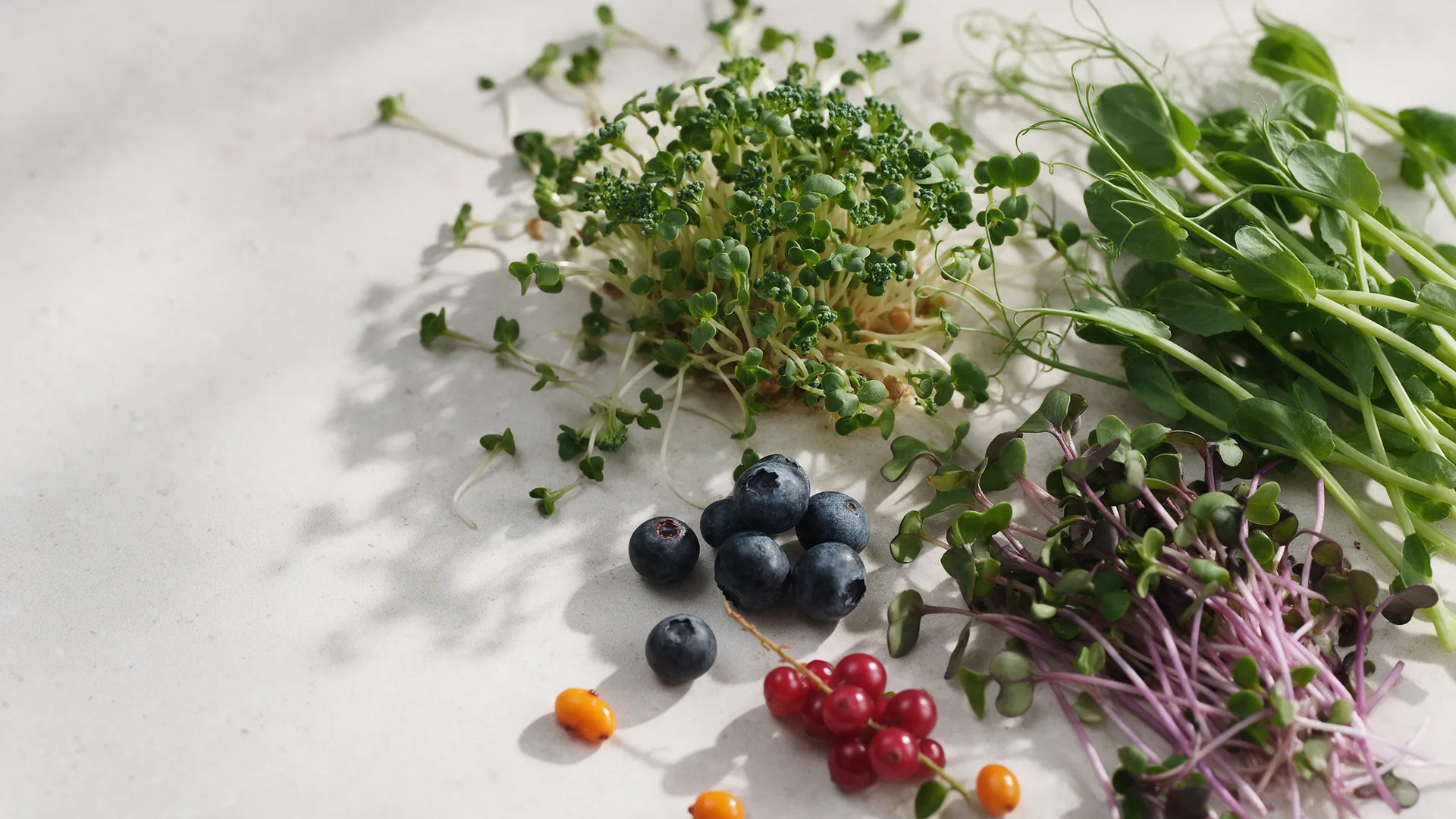
Thoughtfully composed plant blends made for the way you already eat. Freeze-dried microgreens and Nordic berries, in five blends, one 6 g serving at a time.
A planned range. Nothing is for sale yet, prices are provisional and the packaging is a planned design.
The five blends
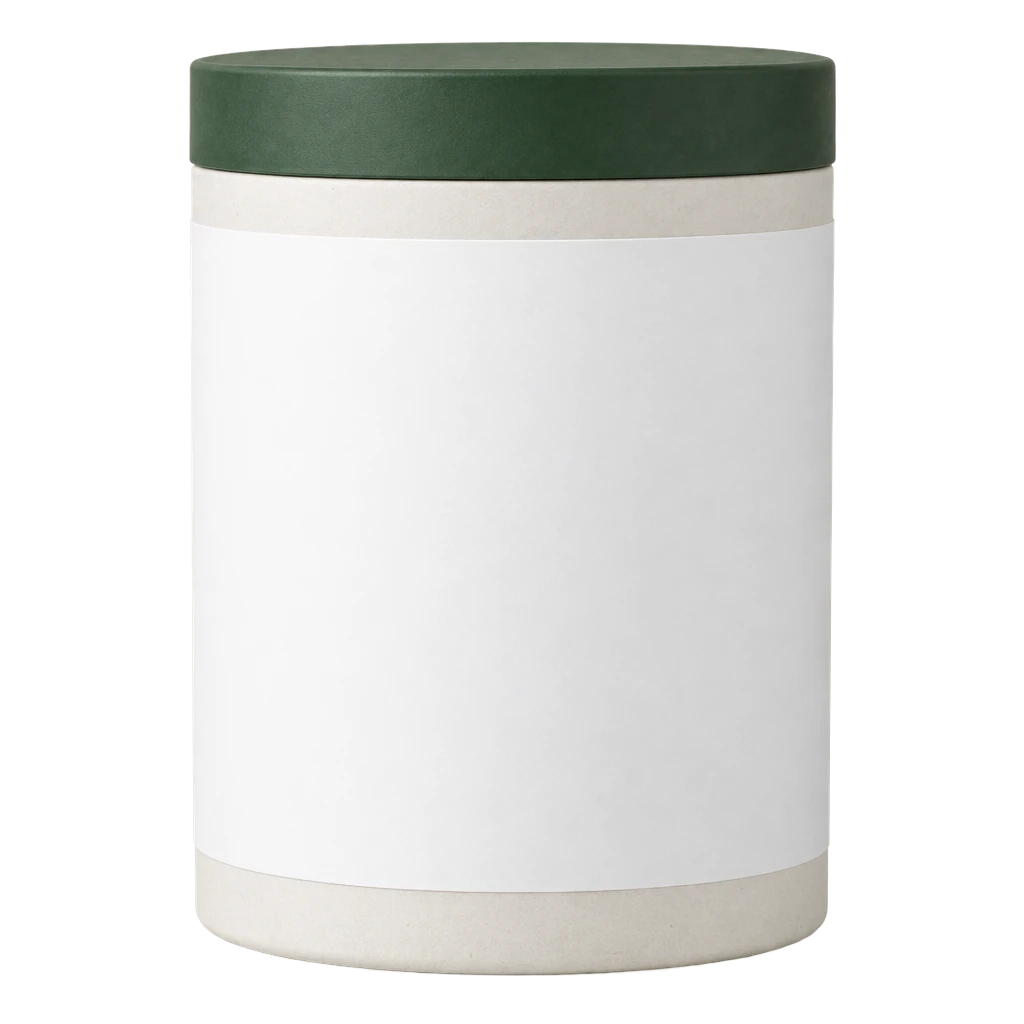
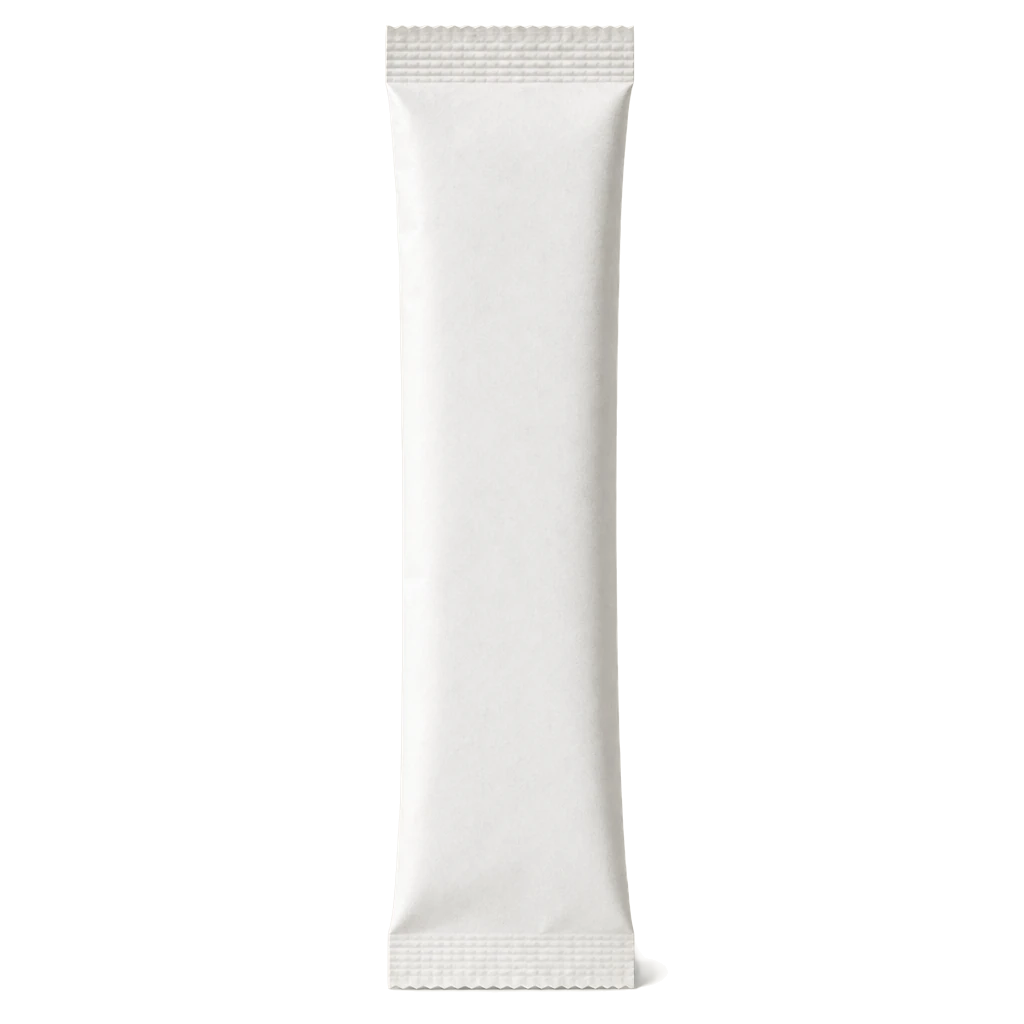
Every blend starts from the same five freeze-dried greens and a planned 10 to 15 percent of Nordic berry powder. What changes is the fruit and the few named flavor ingredients on top. Prices are provisional working figures; the packaging is a planned design with the label laid over it.
Bilberry, lingonberry and vanilla
The flagship: forest berries over a mild green base, rounded with vanilla.
Cocoa, bilberry and aronia
Deeper and darker: cocoa leads, bilberry and aronia follow.
Sea buckthorn, lemon and mint
Bright and sharp: sea buckthorn with lemon and a cool thread of mint.
Mild: apple, bilberry and vanilla
The mild one, made to fold into plant yogurt and porridge without a fight.
Savory: lingonberry, sea salt, onion and black pepper
The savory sprinkle: greens with lingonberry, sea salt and pepper for plates, not bowls.
Why microgreens
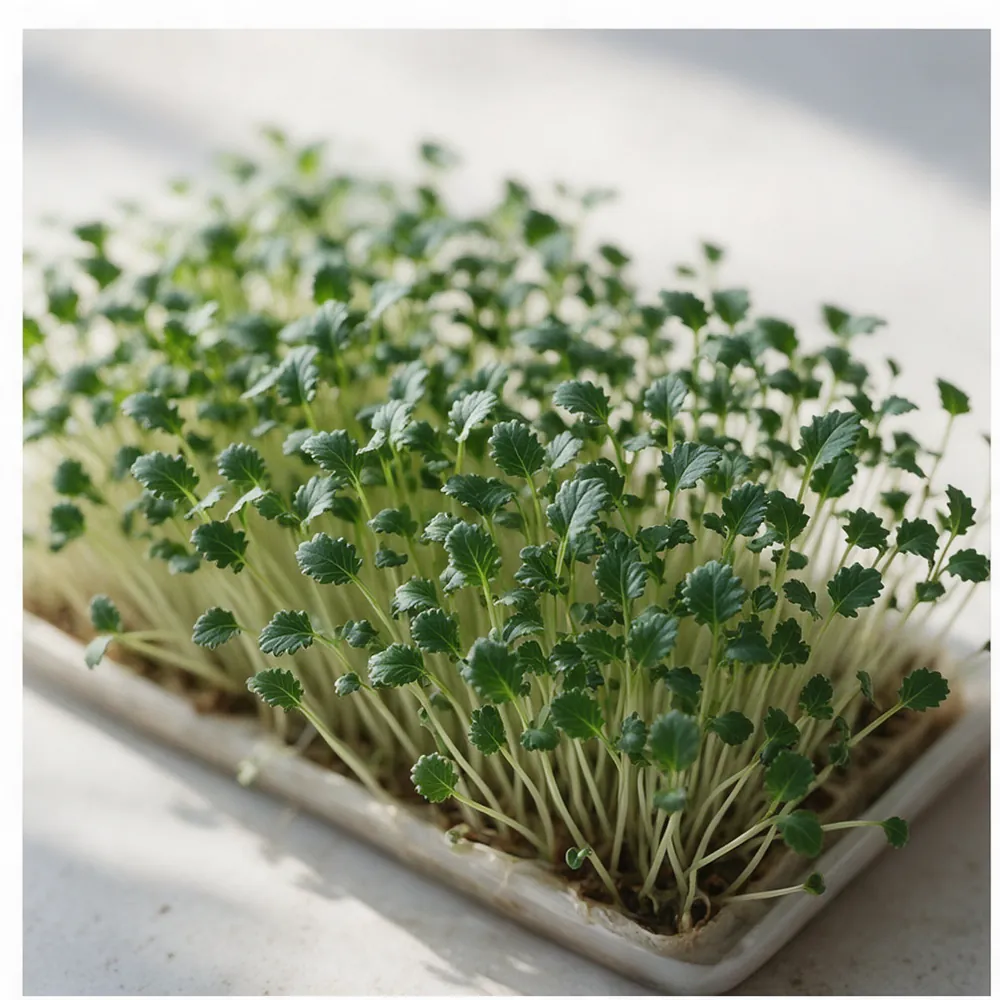
Microgreens are the seedlings of edible plants, harvested one to three weeks after sowing, when the first leaves have opened. Broccoli, pea, radish, kale: the same plants you know, cut young.
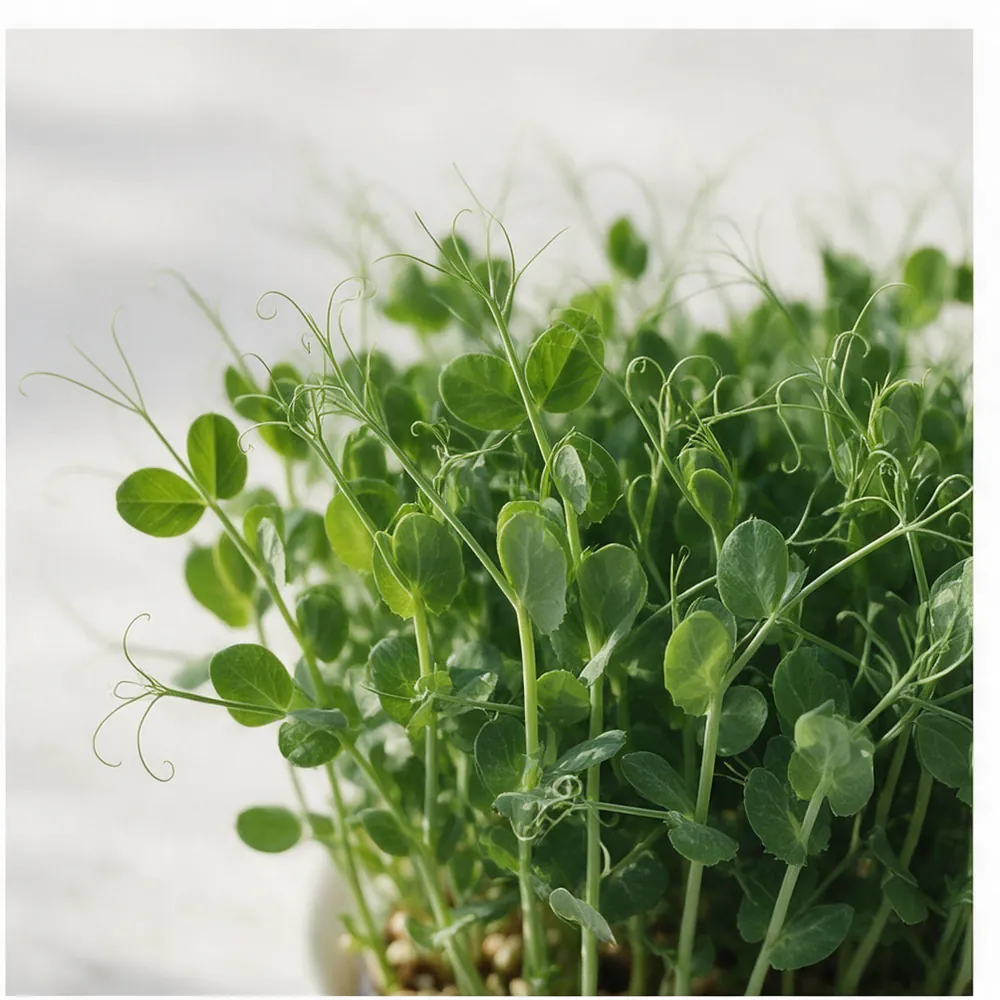
A young shoot is all leaf and stem, with none of the fibrous structure a mature plant builds. The flavor is concentrated and clean: pea shoots taste of peas, radish shoots of radish. Composition varies by species, by how they are grown and by harvest day, and we say no more about it than an analysis of our own blend can show.
Five, chosen for flavor and a long history as food: broccoli microgreens, pea shoots, radish microgreens, young kale and spinach. Each is named by its botanical name on the ingredient pages.
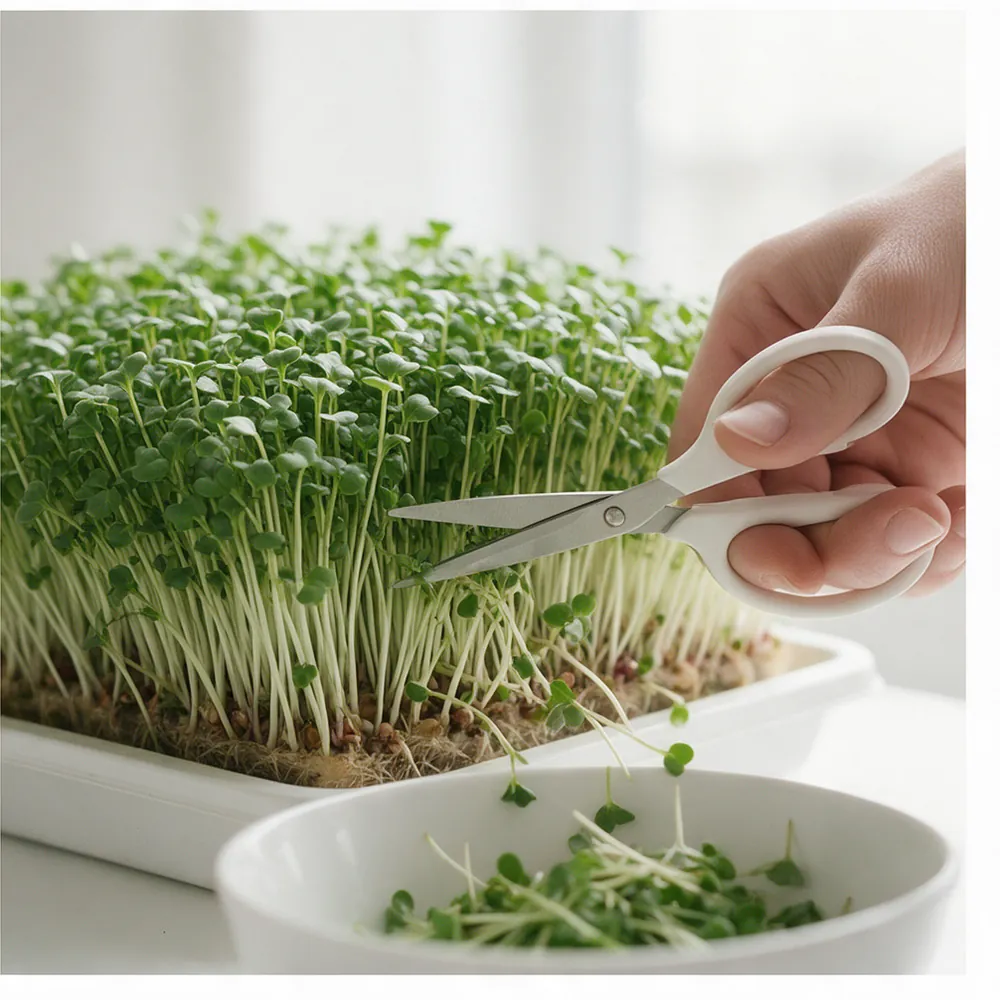
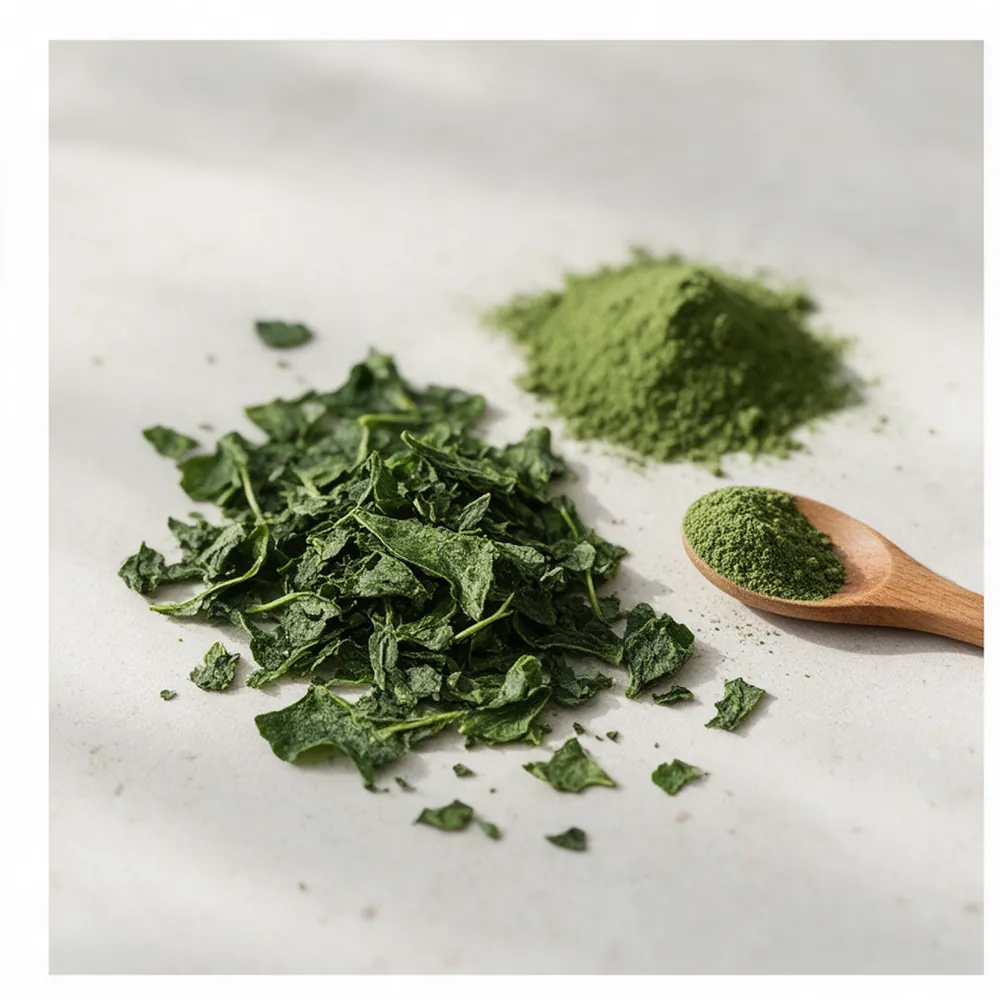
Cut above the growing medium, washed, freeze-dried and milled. Freeze-drying is the planned method for every green and berry in the range.
Because they are beautiful ingredients that most people never get to eat, because they grow in trays in any season, and because a freeze-dried spoonful is the simplest way we know to put a little more green into food you already make.
Meet the ingredients
Every green and berry in the range by its common and botanical name, with what it does in the blend and how it tastes. Origin is stated on each ingredient page once a supplier is contracted, and not before.
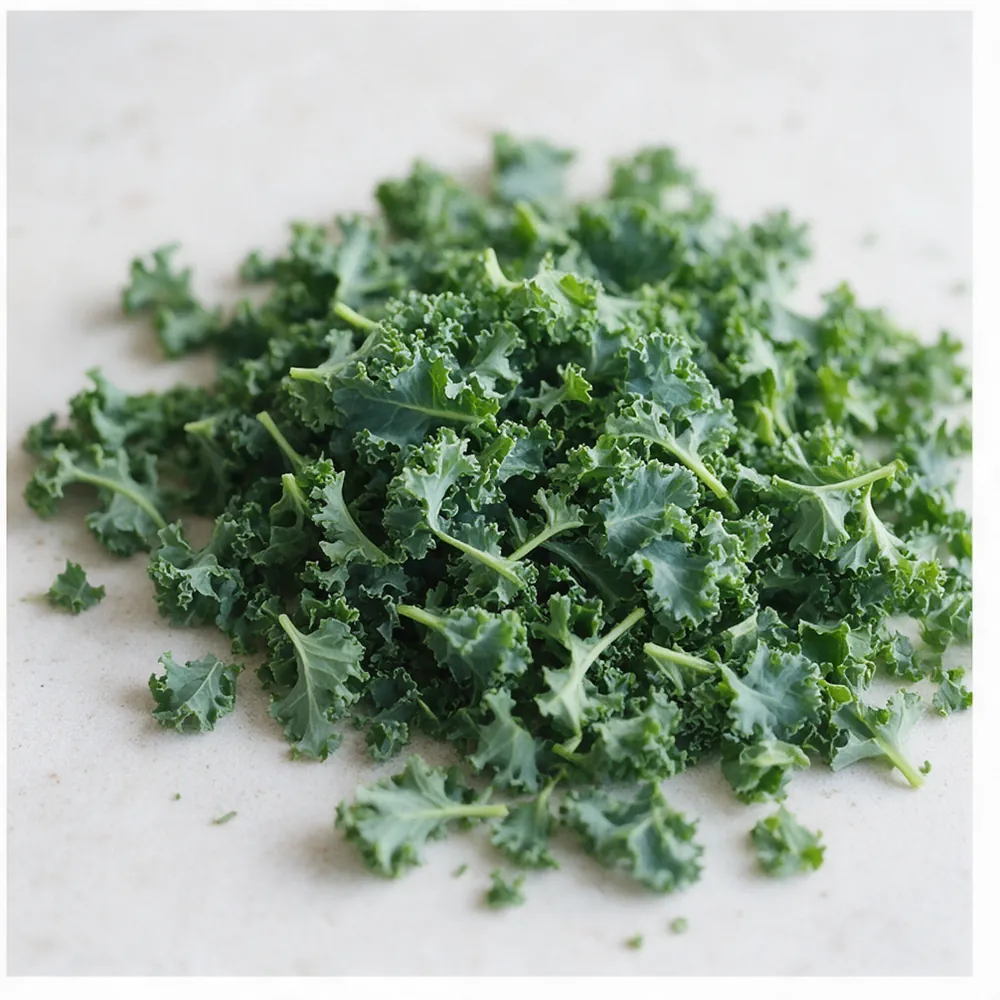
The backbone of the greens base in every blend.
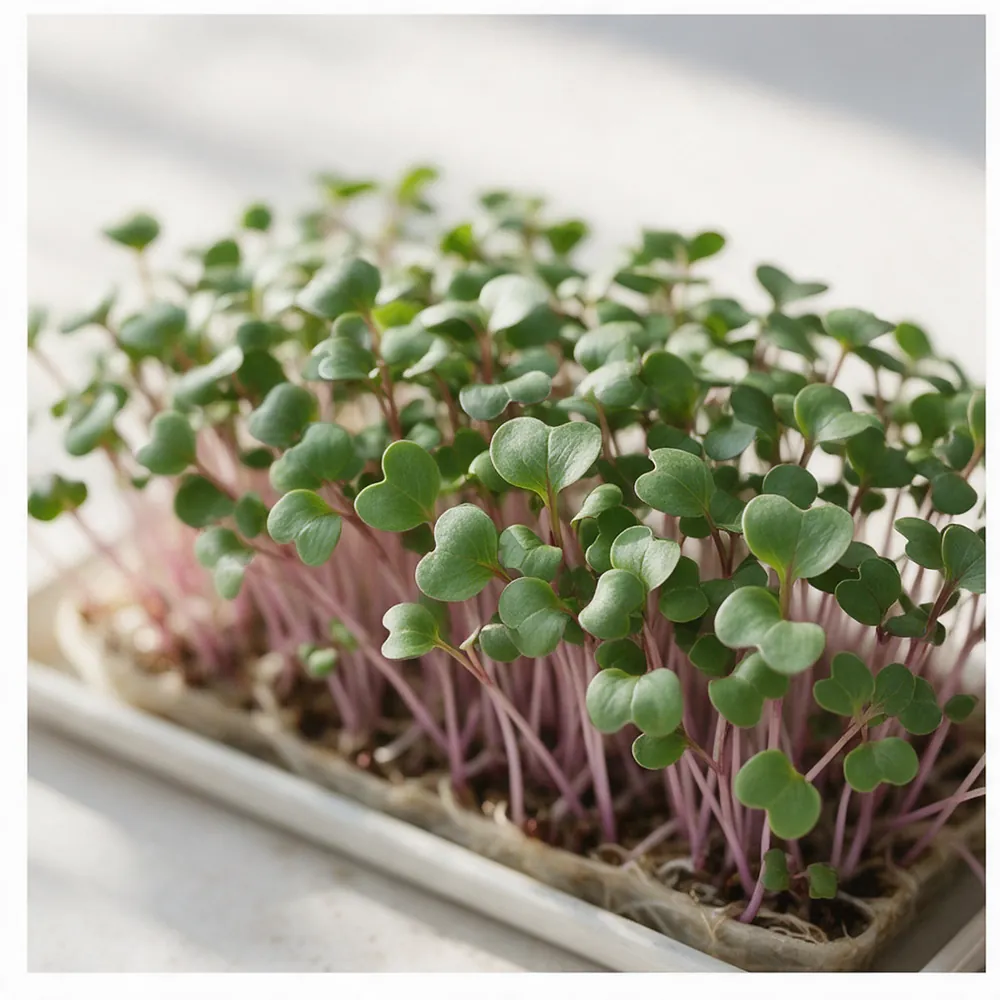
A peppery lift in the greens base, at a smaller share in Familj.
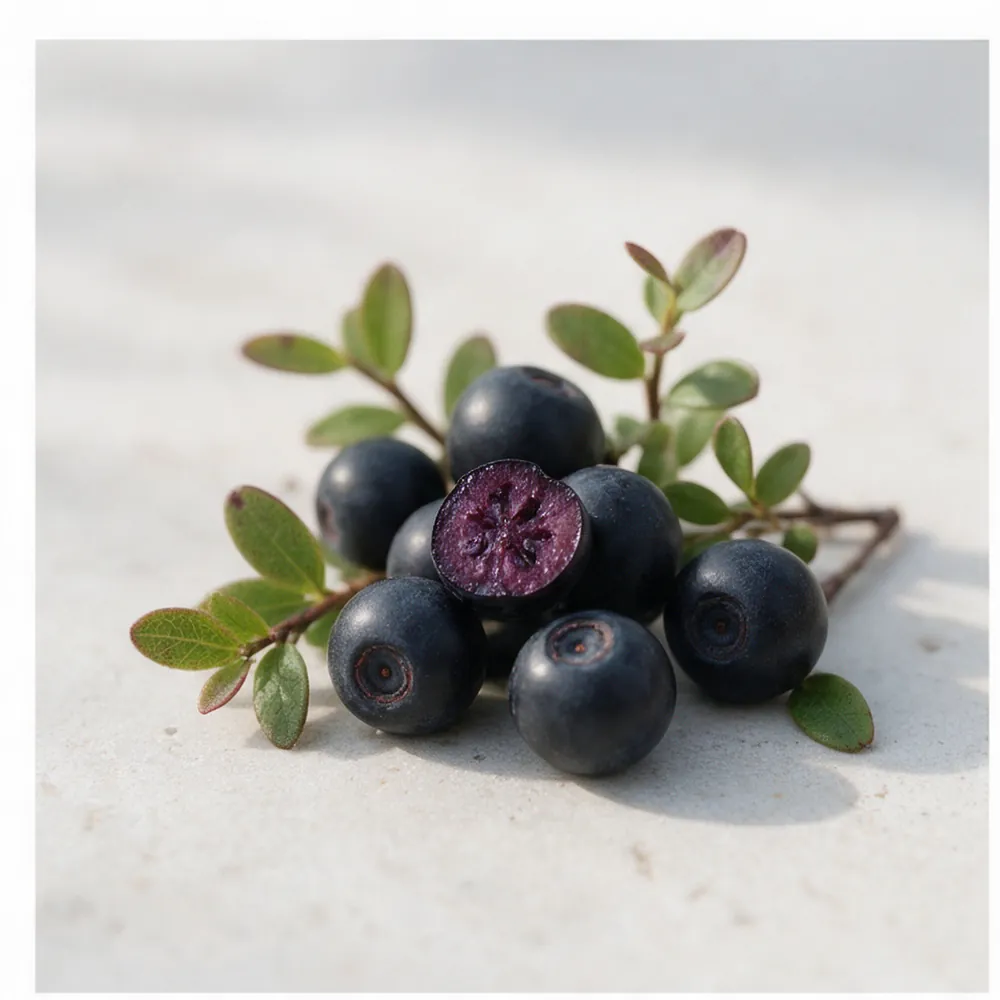
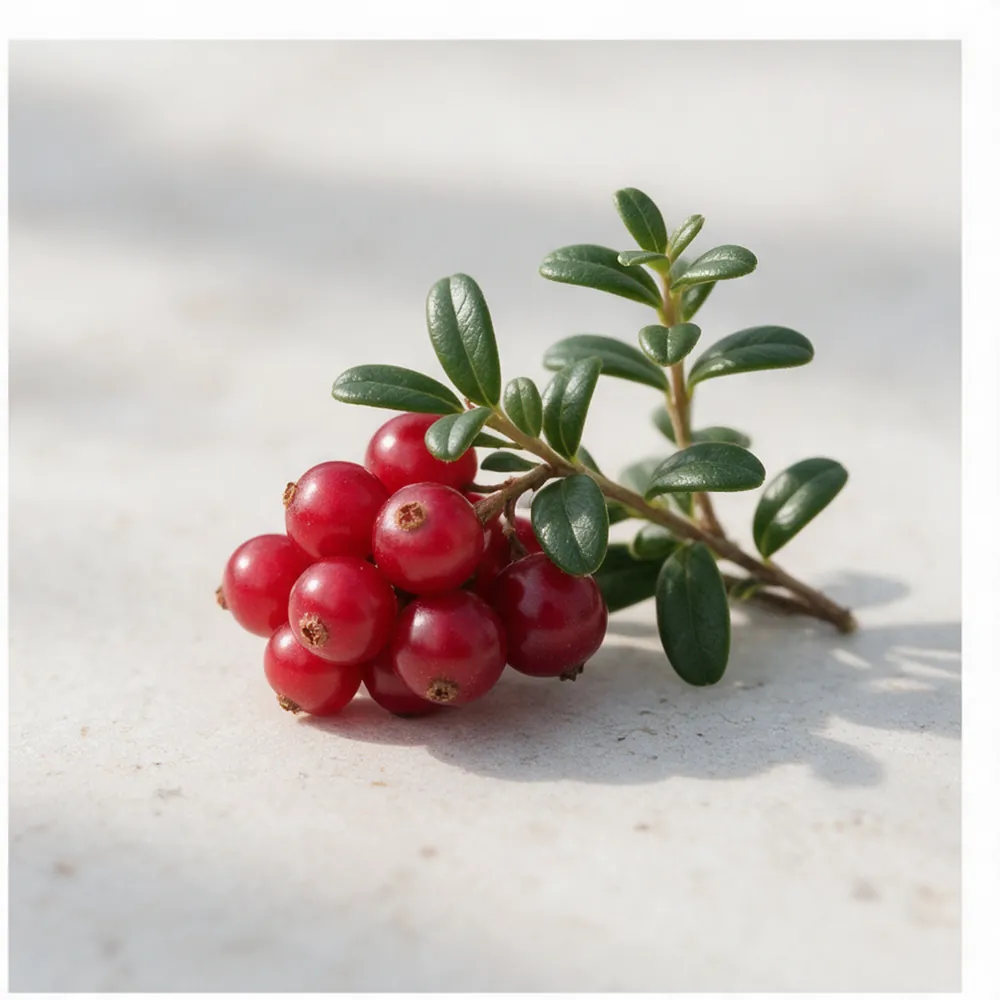
The sharp red note in Skog and the sweet-sour thread in the savory sprinkle.
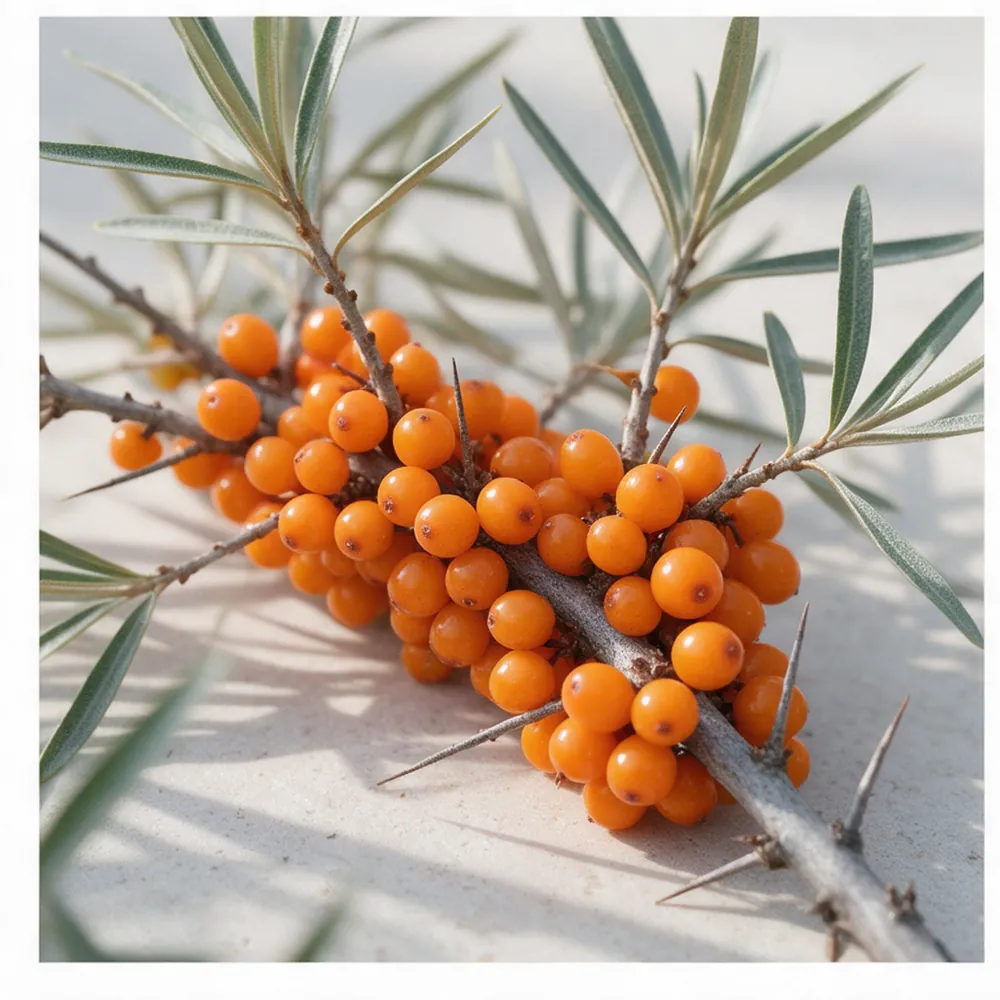
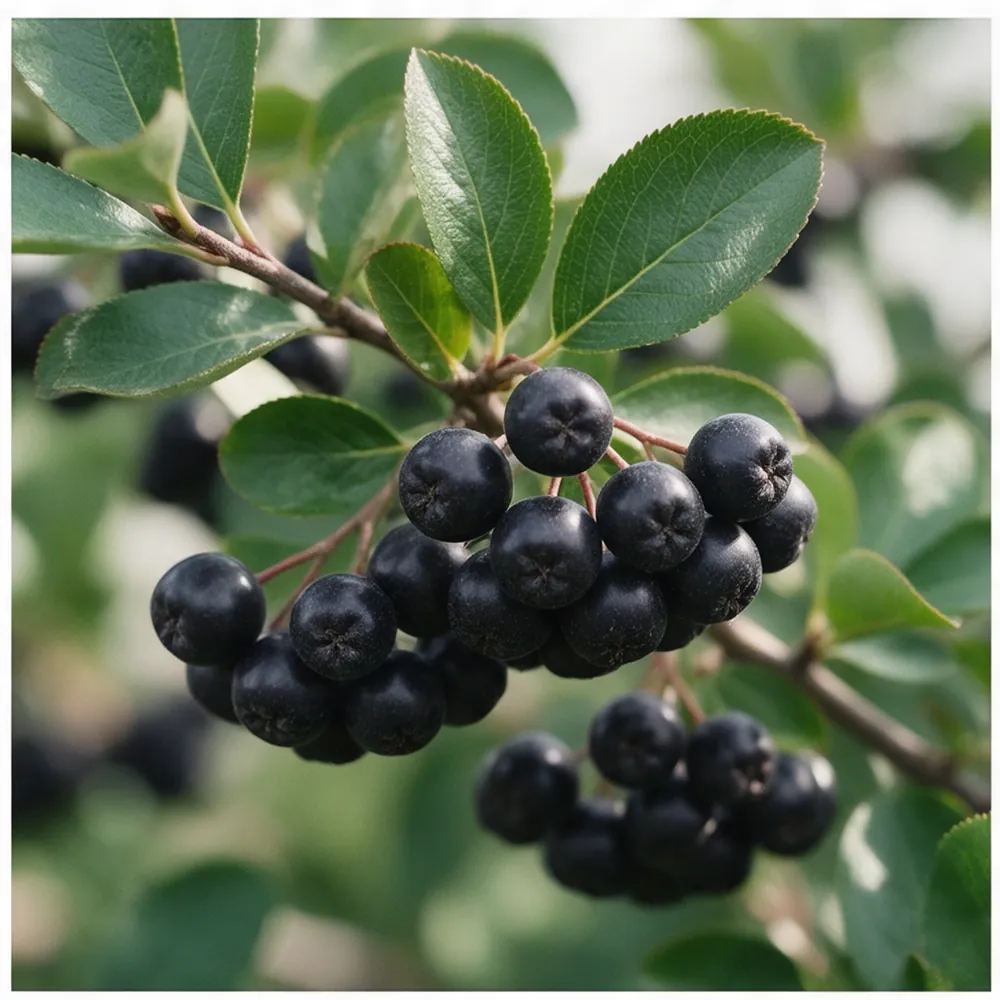
The Nordic berry story
Three berries give the blends their color and their edge. Bilberry, the small wild cousin of the blueberry, deep purple and intensely fruity. Lingonberry, bright red, tart and a little bitter, the taste of a Scandinavian table. Sea buckthorn, orange and sour, a northern berry that tastes almost tropical. Aronia, dark and drying, finishes the cocoa blend. Where each one is grown is stated when the supplier is signed; until then they are the berries of the North by species, not by certificate.
How it is made
The intended process, step by step, with the state of each step. Decided means written into the specification; in progress means work has started; planned means a commitment without a document behind it yet.
Five species with a long history as food: broccoli, pea, radish, kale and spinach, grown as young shoots and leaves. Species and plant parts are recorded for each so that the novel-food status of every ingredient can be confirmed before launch.
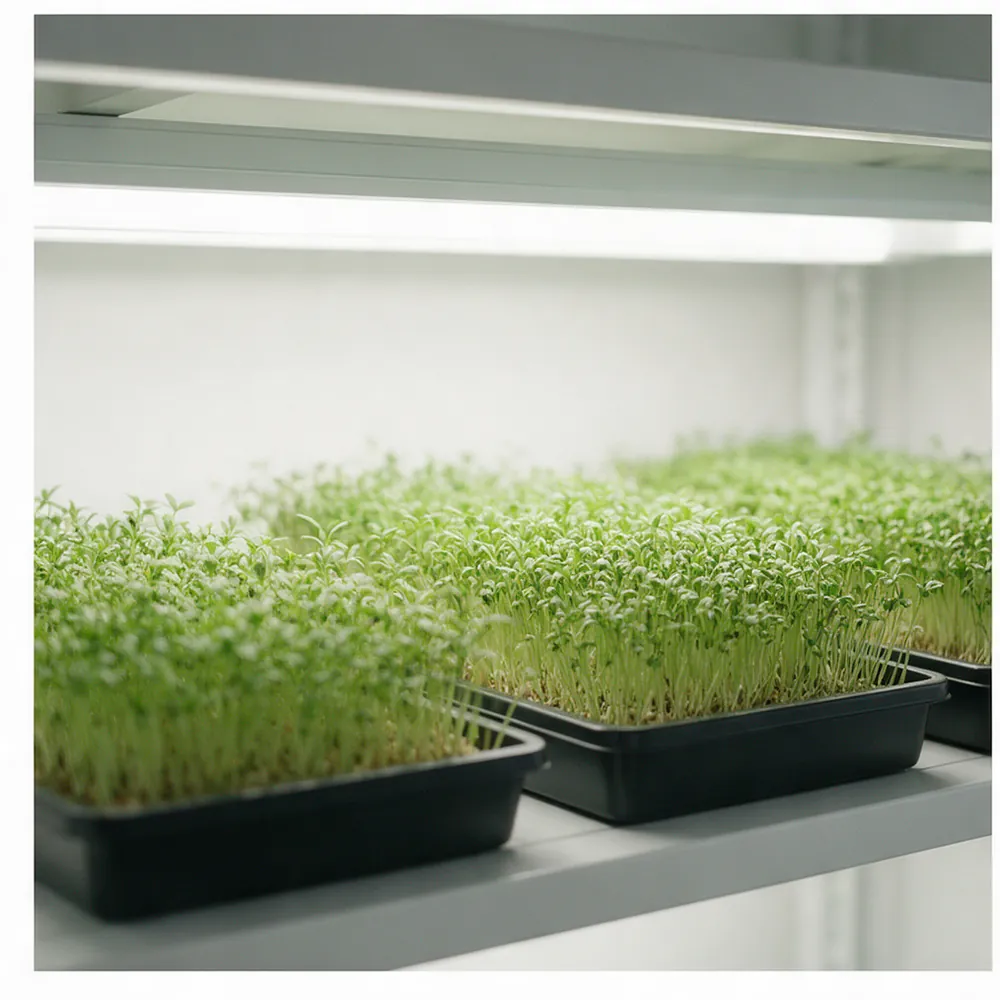
Grown in trays under controlled light and water, by a grower under contract or by ourselves; the decision between the two is open and depends on the pilot quantity. No grower is named until a contract exists.
Microgreens are cut just above the growing medium at the seed-leaf stage, so that no roots, no medium and no seed husks go into the product. This is the intended method and the only one we will use.
The cut greens are washed and freeze-dried: frozen, then dried under vacuum so the water leaves as vapor at low temperature. Freeze-drying is the planned method for the greens and the berries; no other drying method is used as a substitute.
Dried greens are milled to a fine powder (coarser for the savory sprinkle) and blended with freeze-dried berry powders and the few named flavor ingredients of each blend, to a written recipe with fixed proportions.
Packed into 6 g sticks and 150 g canisters with a batch number and best-before date, after each lot has been tested.
Transparency and quality
Every green and berry is named by its common and botanical name, on the site now and on the label later. No blend hides behind a greens blend line.
Each blend has a written recipe with ingredient order and proportions. The proportions are published when the recipe is final; until then the site shows the framework and marks the rest tbc.
The country where each ingredient was grown is stated once a supplier is contracted. Nothing is called Nordic, Scandinavian, local or wild on the label unless the document says so.
Cut above the substrate, washed, freeze-dried, milled, blended, packed. Described on How It's Made with the state of each step.
A nutrition declaration per 6 g serving from a reliable calculation or an analysis of the first batch. No estimates stand in for it.
Each lot tested for lead, cadmium and nitrate and for microbiology by an independent laboratory, as appropriate to the final recipe and its risk assessment, with the certificate linked from the product page. No test has happened yet and no certificate is shown.
Everyday use
One 6 g serving, into something you were already going to eat. The directions on the pack follow the final recipe; these are the four places the blends were designed for.
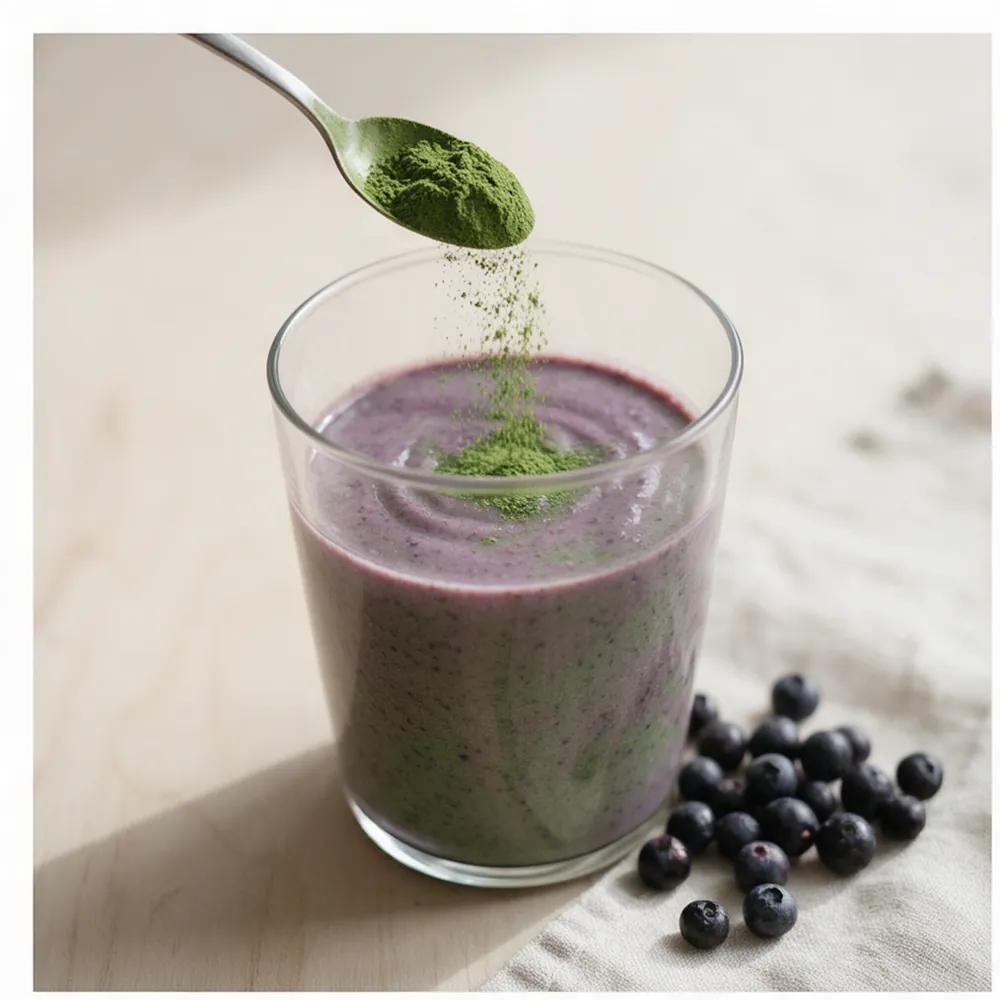
Skog or Havtorn with fruit and oat milk.
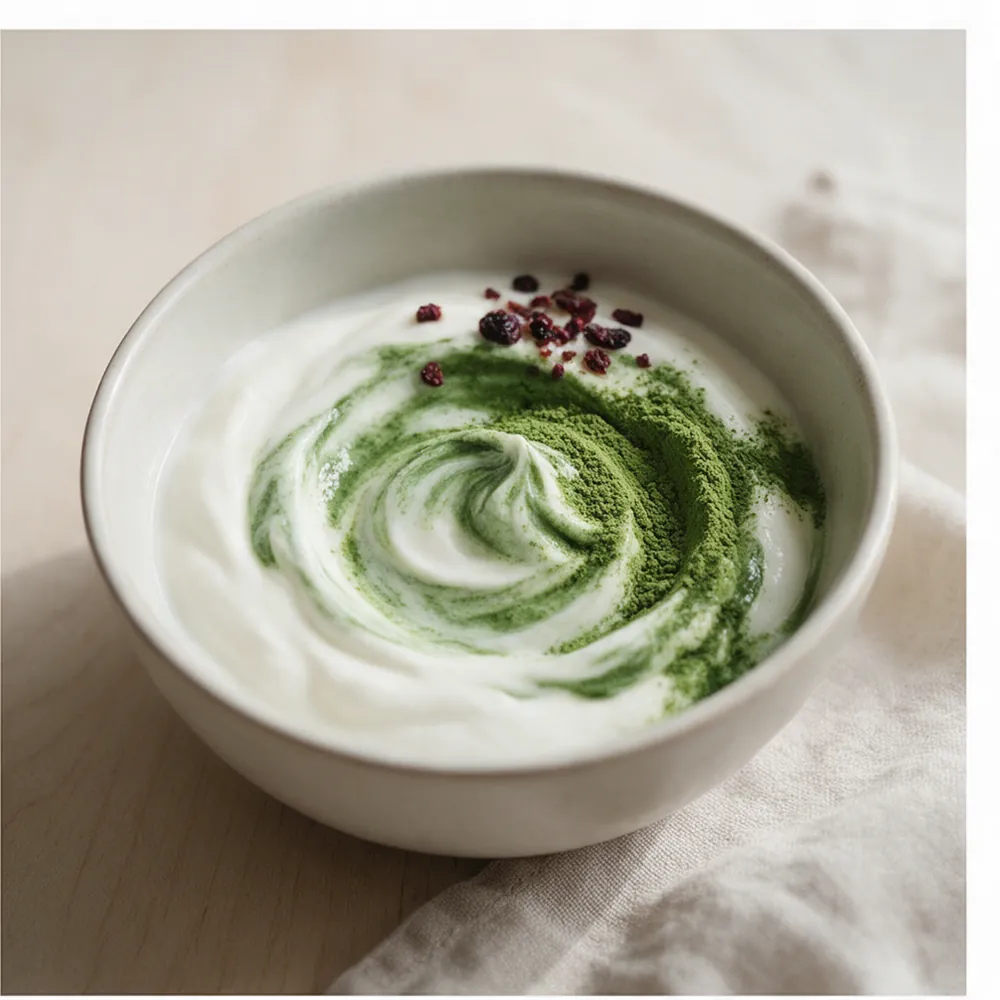
Familj, stirred through until the color is even.
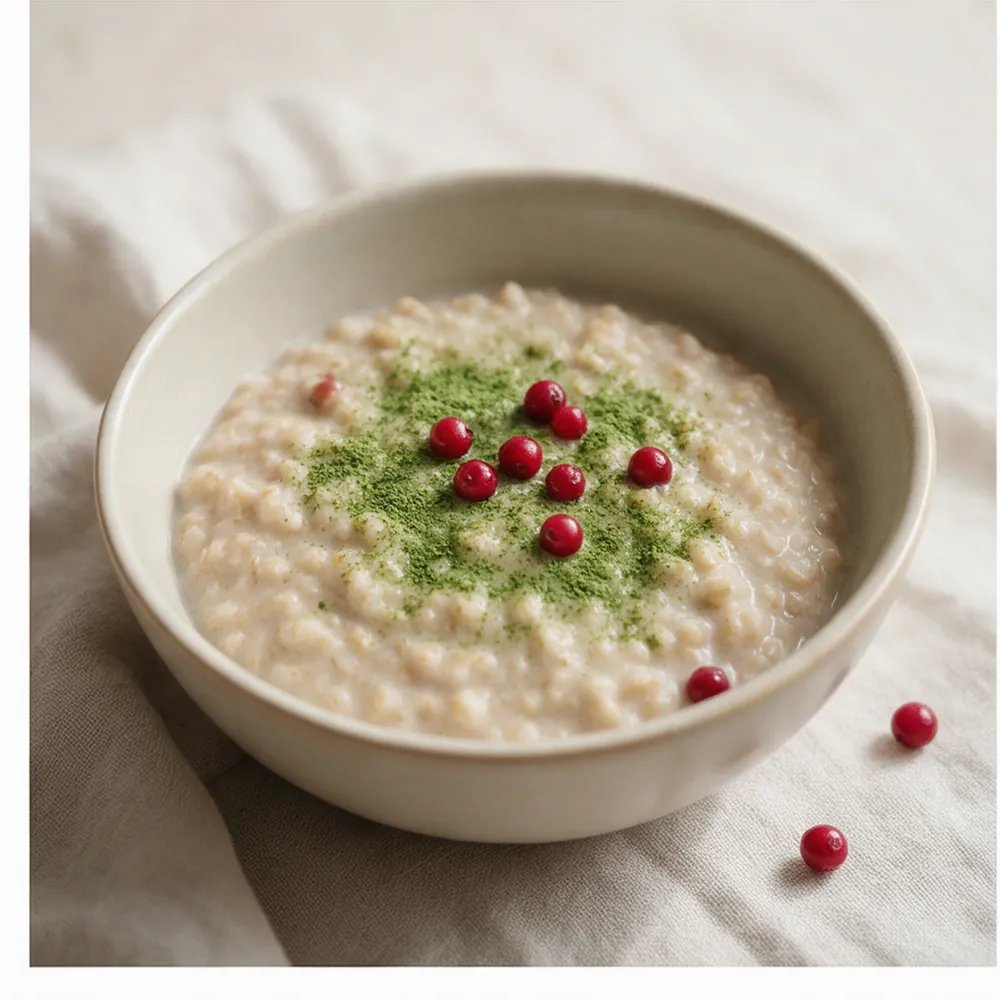
Skog over oats with a few lingonberries.
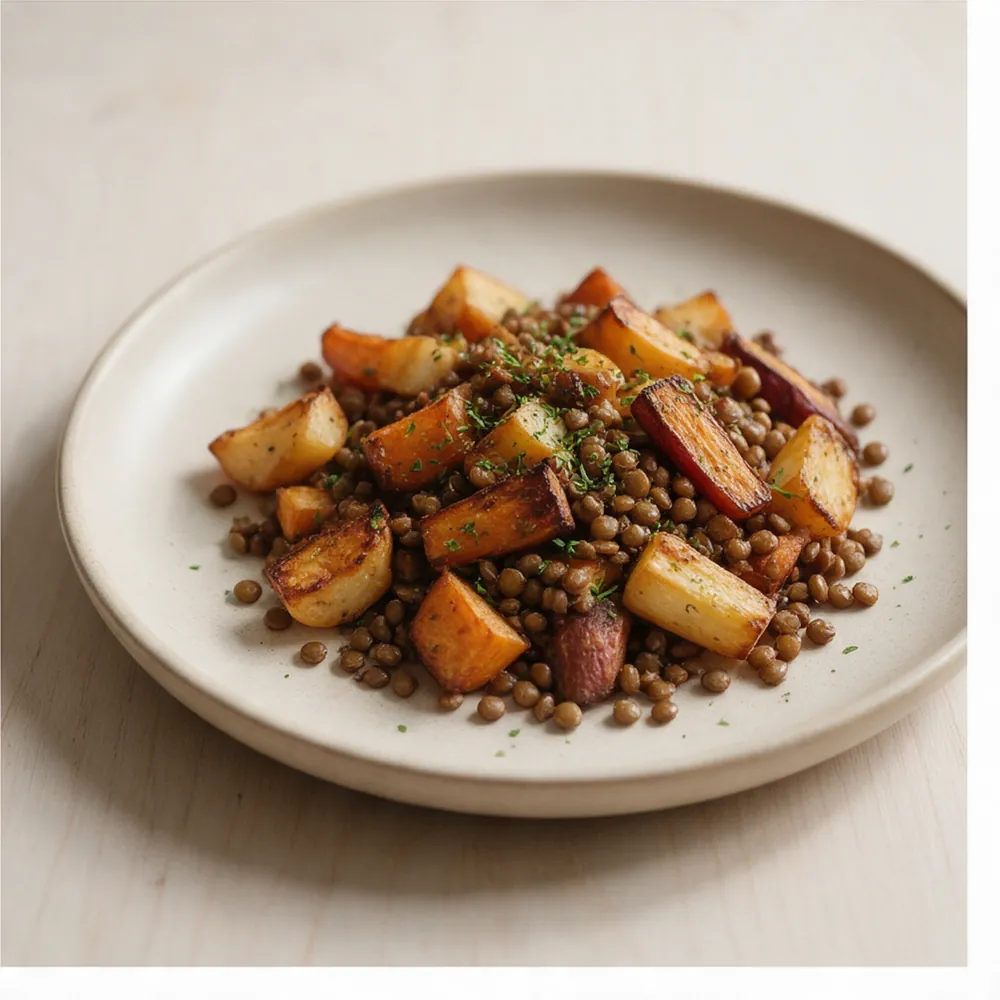
Kött over roasted roots and lentils.

The founder
I am Barbara. I have eaten plants since I was a child, I live and train in the Nordics with two dogs, and I write Barbara of North. Greens of North is my own brand, and it began with trays of pea shoots on a windowsill and the question of why such good ingredients only ever turn up as a garnish.
The answer became a small range: young greens, freeze-dried so they keep, a share of the berries I grew up picking, and a design I would be happy to leave on the counter. The growing and the drying will be done by people whose job it is; my job is to say exactly what is in the tin.
The launch list
Get launch updates and be first to hear when Greens of North is ready. One email when there is news, nothing in between.
Get launch updates and be the first to hear when Greens of North is ready. Joining the list is not a purchase or a reservation: nothing is held, nothing is charged, and you can leave with one click in any email.
Questions
There is no date yet. The recipes are a planned framework, the first pilot batch has not been made, and the company that will sell the range is still to be registered. The list is the only way to hear when that changes.
No. It is an email address and a consent tick. Nothing is held for you, nothing is charged, and you can leave with one click in any email.
No. The two prices shown are provisional working figures in euros including VAT from the planning sheet. Final prices follow the first production quotes.
A base of freeze-dried broccoli microgreens, pea shoots, radish microgreens, kale and spinach, a planned 10 to 15 percent of freeze-dried Nordic berry powder, and the few named flavor ingredients of that blend. Proportions are published when the recipes are final.